
The Cult make a career move on Sonic Temple and are briefly promoted to the Big Time
(Image credit: Beggars Banquet)
Sun King
Fire Woman
American Horse
Edie (Ciao Baby)
Sweet Soul Sister
Soul Asylum
New York City
Automatic Blues
Soldier Blue
Wake Up Time for Freedom
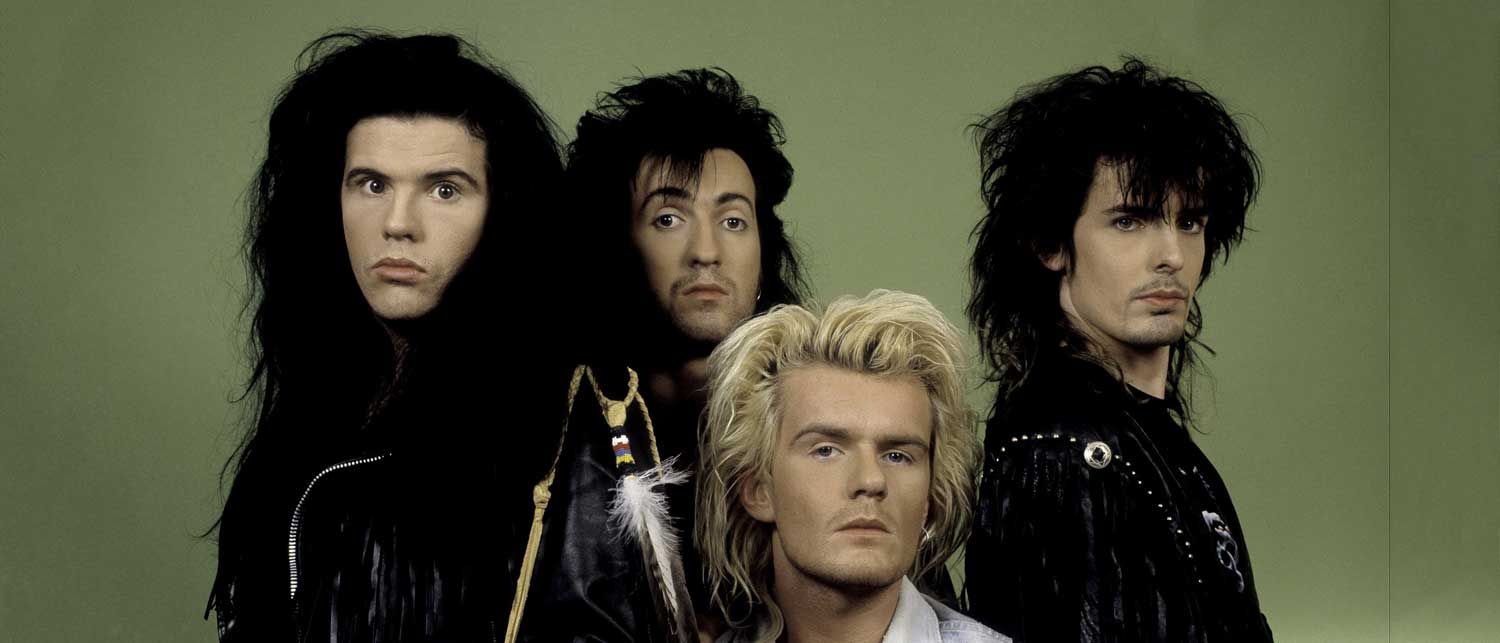
Sonic Temple was The Cult in their pomp, their ultimate bid to become the biggest band on the planet. They didn’t manage it, but they did leave behind this glorious monument to lyrical hubris and sonic excess.
Produced by Bob Rock, their fourth album took their usual preoccupations – glamorous losers on Edie (Ciao Baby), the suffering of indigenes on American Horse – and turned up the noise. Soul Asylum was pure Zep worship, Fire Woman their wailing, throbbing apotheosis, while Sun King seemed to acknowledge that The Cult knew they’d reached their limit (‘This is where it all ends’).
“It was a little careerist, for sure,” guitarist Billy Duffy told us. “I don’t think Ian [Astbury, frontman] resisted that, but I don’t think he viewed it from the same perspective, either. I think he saw it as being more psychedelic.
“I think he saw it as having more of Cream, Disraeli Gears sorta vibe, more than my sort of ultimate schoolboy rock album idea. You know, no-holds-barred, punk is finally over; I just want to have a full-fledged rock album while I’m at the prime of my powers kinda thing. So maybe I took the lead on this one.”

- Stream on Spotify
- Stream on Apple Music
Every week, Album of the Week Club listens to and discusses the album in question, votes on how good it is, and publishes our findings, with the aim of giving people reliable reviews and the wider rock community the chance to contribute.
Join the group now.
Other albums released in April 1989
- Beneath the Remains – Sepultura
- Blue Murder – Blue Murder
- Twice Shy – Great White
- Doolittle – Pixies
- Buzz Factory – Screaming Trees
- Blue Blood – X Japan
- Full Moon Fever – Tom Petty
- Headless Cross – Black Sabbath
- Sea Hags – Sea Hags
- Best Wishes – Cro-Mags
- Repeat Offender – Richard Marx
- Mr. Music Head – Adrian Belew
- 1,000 Hours – Green Day
- The Black Swan – The Triffids
- The Headless Children – W.A.S.P.
- Slippery When Ill – The Vandals
What they said…
“Sonic Temple finds the Cult trying several different metal styles, from crunchy Electric-era ’70s grooves and the fuzzy, noisy psychedelia of Love, to mellow ballads and commercial ’80s hard rock. Not all of the experiments work, as some of the songs lean toward ponderousness, but enough of them do to send Sonic Temple into the Billboard Top Ten, due to the exposure provided by the hit single Fire Woman.” (AllMusic)
“This is the past recycled. Which is quite different from revamping it. It’s the definitive Cult LP, Astbury tells us, and Sonic Temple, what with its supposed references to their drippy spirituality and granite hard rockisms, is the definitive title. Soul Asylum is Astbury at prayer, at one with his ‘precious child’, the ‘sweet warm goddess’, proving himself the only rocker brave enough to admit to not pulling the wings off little insects.” (Record Mirror)
“Though they’ve run a bit short on good riffs this time, it’s possible to put Sonic Temple on and have a perfectly fine time with the big beat (this was cut with studio drummer Mickey Currey before new drummer Matt Sorum joined), big guitar noise and Ian Astbury’s ragged, not-too-high-pitched vocal histrionics, if you don’t think too hard. But sheesh , is it stupid.” (Los Angeles Times)
What you said…
Nick Tedds: Following the psychedelic/goth infused Love and the raw, hardened edginess of Electric came the third in the trilogy of what I consider to be The Cult’s best work. Sonic Temple blends some of the finest elements from the previous two albums, mixed with a dollop of Bob Rock-crafted sheen, leading to one of the stronger rock albums from the late eighties.
The opening tracks, Sun King and Fire Woman, set the tone and a very high bar indeed; all big riffs, played at a blistering pace. When affairs settle down a little, mid-tempo, atmospheric, bluesy numbers such as Soul Asylum offer balance but no let-up in terms of quality. I admit that Edie (Ciao Baby) was a little bit of a slow burner for me at the time of release, but I now appreciate the full glory of this emotional ballad, whilst the catchy Soldier Blue gallops along to a pounding beat as matters begin to draw to a close.
Billy Duffy is on fire throughout, revelling in the freedom offered by songs that often hit home instantaneously and have, for the most part, stood the test of time. There are also not many vocalists that can match Ian Astbury on his day, in terms of range, swagger and all-round wailing ability.
Brett E Wells: This album was released during the final weeks of my senior year of college. It was responsible for the destruction of the woofers in my dorm room speakers. All these years later, I still play it loud.
Chris Downie: Few bands in the classic rock era were more aptly monikered than The Cult, being as they were one of the biggest and best cult bands of the era, one that reinvented itself multiple times, to often enthralling effect. From their psychedelic goth-punk roots as Southern Death Cult, to the AC/DC, Cream and Rolling Stones worship of 1987’s Electric and the indie-rock-inflected self-titled 1994 effort, they never stood still and remained as hard to pigeonhole as they were to predict.
For many fans, however, their peak is usually argued as a toss-up between the gothic alt-rock of 1985’s Love and 1989’s arena rock masterpiece Sonic Temple. While the former had the smash hits of Rain and She Sells Sanctuary and brilliant deeper cuts like Hollow Man, the latter saw them shamelessly rock out in a manner that perhaps should have seen them reach even greater commercial heights; from the MTV hits like Fire Woman to the mini-epic of Soul Asylum (arguably a nod to Zeppelin’s Kashmir), there is barely a weak moment to be found here.
It could be argued their eclecticism, while undoubtedly one of their strong points – if not the strongest – was also their biggest drawback, in that their refusal to stand still and choose a lane, as it were, saw fans of many subgenres come and go over the years. Sonic Temple remains perhaps their most accessible, mainstream offering, but one they struggled to live down since; 1991’s Ceremony was a spirited follow-up and the aforementioned 1994 eponymous release an experimental stab at modernisation, while the metallic sounds of their 2001 comeback saw a renaissance that continues on and off to this day, but they never again sounded this huge.
Bob Rock deserves huge credit for bringing out the arena rock in them, and if there’s only one criticism to be had, it’s in the way it tails off in quality over the last three tracks. Had Wake Up Time been dropped to B-side status and the 11 tracks trimmed to 10, you would have a practically flawless classic. In any case, this is one of at least three albums in their canon that stand the test of time and affirm their brilliance. 9/10.
Brian Carr: My preteen and teenage years were mostly in the 80s, so MTV was a tremendously important part of my musical education. I still have tremendous fondness for that era, but in hindsight I can also see how the visual could be a detriment to budding young musical minds. The Cult were on my periphery with the albums Electric and Sonic Temple, but I have a suspicion that something about their image struck me as a little weird, at least compared to my favourite bands of the time. Or maybe I just didn’t dig Ian Astbury’s voice. Whatever the reason, while I didn’t hate the tunes that I heard from those two records, there wasn’t enough at the time to make me want to listen deeper.
Which turns out to be a shame, because Sonic Temple is a damned fine rock record. First and foremost, Billy Duffy’s guitar playing is fantastic on this record. I know The Cult went through different musical sounds/stages in their career, and Duffy probably didn’t always play as he does here, but this is definitely in my wheelhouse, and certainly justifies the cover artwork. As for Astbury’s voice, it’s interesting – his vocal delivery reminds me of Andrew Wood from Mother Love Bone, not in tone, but in his phrasing. And I loved Mother Love Bone. And it turns out that grown-up me is just fine with his voice.
So with this week’s Album choice, I’m going from two rarely listened-to songs in my Apple Music library to the entire record being added, with the likelihood of more attention on my part. And it only took 37 years for me to get there!
The Cult – Fire Woman HD – YouTube
Watch On
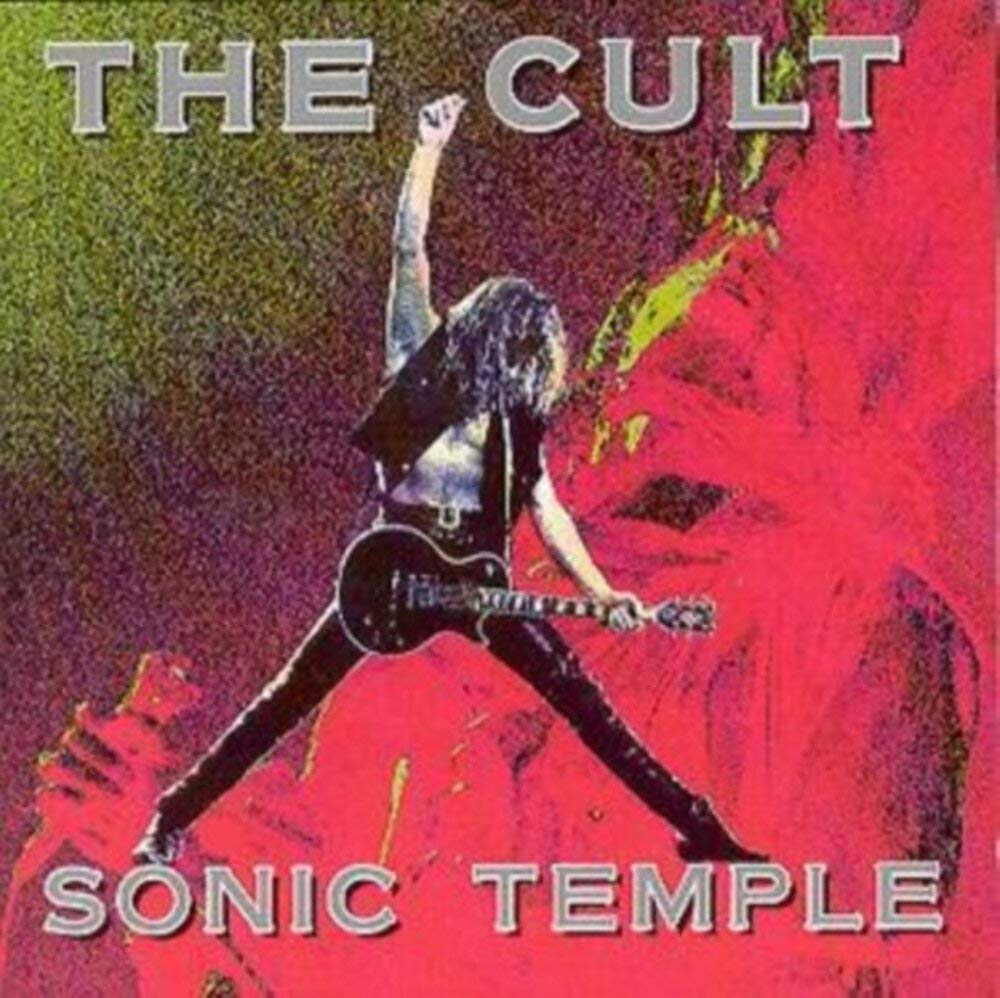
Greg Schwepe: So, readers, raise your right hand (as Billy Duffy is doing) if the first time you saw the cover of Sonic Temple you immediately said to yourself (or out loud!) “Hell yeah! I bet this album f***ing rocks!” Right? This is a case where you can judge an album by its cover, and you get it 100% right. There’s Billy, feet splayed, arm raised high to windmill a power chord on his Les Paul Custom. Just like Pete Townshend. And the same pose that Jack Black instructed his young guitarist protege to make in School Of Rock.
When you make a statement like that on the cover, you better deliver, correct? And The Cult totally delivered on Sonic Temple. Almost an hour of crunching riffs that keep coming. There’s no letup, and not one song I don’t like. As I listened multiple times again today, it was a steady stream of “damn, that one’s good too” as I went through the tracks. And I found this happening at the tail end of the album, where a lot of times a band seems to lose its steam. I might venture that the second half of the album is stronger than the first half. But then again, the first half is pretty damn good too!
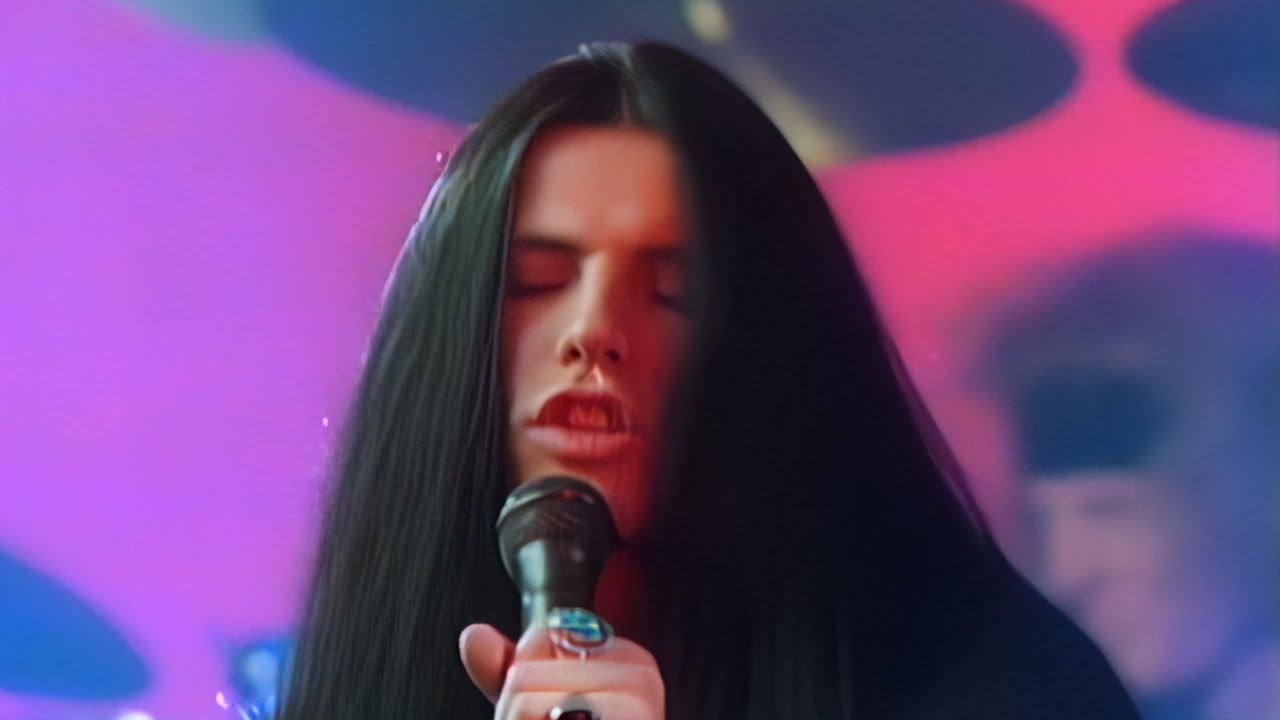
My first encounter with The Cult was via MTV, and not radio. And I will admit, they kinda confused me. They were kind of a contradiction in styles. Watching the video for Fire Woman, you had this kick-ass mainstream rock song. But you had a wall of amps in the performance video that screamed metal, but the hairstyles screamed goth or punk. And the bell bottoms Ian Astbury was wearing kind of said 70s hippie. I sure as heck couldn’t pigeonhole this band, but I sure as heck liked them. FM radio around me was slow to embrace them because they couldn’t be put in a specific box. But once you get a kick-ass track like Fire Woman, that finally fit in nicely with the normal Midwest FM radio AC/DC/Zeppelin/Aerosmith/ZZ Top rotation they were playing.
This is my go-to Cult album (with Electric being a close second). Again, the tracks are just relentless, and the energy never lets up. 8 out of 10 on this one for me. Buy it for the cover vibe, stay for the music that backs it up.
Philip Qvist: A friend of mine gave me the best description of The Cult during their 80s peak by stating that they acted as though they were behind and ahead of the rock music curve, both at the same time. This confused both the casual listener and record companies. I mean, how do you pigeonhole a band that refuses to listen to the rules? In addition, they never seemed to hold onto a drummer for more than six months.
Despite all that, though, in the space of four years they released three absolute classics: Love in 1985, the superb Electric in 1987 and arguably their peak with Sonic Temple in 1989. And this neatly brings us to this week’s review.
The album includes three iconic singles: Fire Woman, Sweet Soul Sister and Edie (Ciao Baby), their tribute to the ill-fated Edie Sedgwick and easily my favourite ever song from The Cult. But it is the other tracks such as Sun King, American Horse, the epic Soul Asylum and Soldier Blue that always bring me back to Sonic Temple. Yes, it does run out of a bit of steam after Soul Asylum, but that is relative, as many bands would have loved to have had a New York City or Automatic Blues on their record.
You can argue over which is the band’s best album, and Electric definitely runs it close, but for me Sonic Temple was their peak. Bassist Jamie Stewart would depart from the band a year later, while the relationship between the band’s songwriters, mainly singer Ian Astbury and (the underrated) guitarist Billy Duffy, would begin to sour, with a corresponding drop in quality on later albums (they were still good though).
Sonic Temple rocks and it has great songs on it. It is my favourite Cult album for a reason. 9/10 from me.
Mark Herrington: Undeniably, Sonic Temple is a very good rock album, but the Cult had lost something by this point. I had started out listening to Southern Death Cult, then Death Cult and those initial albums of the Cult, which still retained much of that mystical strangeness that typified them.
It’s probably why I prefer Fire Woman and Sweet Soul Sister most here, as they retain a flavour of that earlier stuff. The rest here is very good, but lacks much of their unique Goth character. For that, I would always choose Love over this.
The Cult – Edie (Ciao Baby) HD – YouTube

Watch On
Craig Glenn: Not a bad album, but I think they nailed it on the previous album, Electric, which was full-on rock. They should have stuck with Rick Rubin instead of switching to Bob Rock as producer. They got back on that Indian spiritual stuff with this, then went full-blown with it on Ceremony, which is far from their best.
Paul Cropper: After trying to be AC/DC on Electric (another great album), The Cult turn into a bombastic American arena rock group. Love it.
Mike Chronakis: By far their greatest album for me. So many great songs on there, especially Fire Woman and Sun King.
Mike Ginsberg: An incredible album following another incredible album, both of which are underrated classics.
Joe Cogan: Their best album, with the epic Soul Asylum as their artistic pinnacle.
Adam Ranger: As a callow youth, I saw this band when they were supporting Sisters of Mercy. They were Southern Death Cult back then, of course. At the time I liked goth, and I liked rock, but I have to say I was a bit dismissive when they became the Cult and went full rock band.
However, as I have aged, I have (generally) become less dismissive of such things and have learnt to appreciate the Cult for what they are. A great, sky-punching, anthemic, stadium rock band.
This album starts strongly with Sun King and continues in much the same vein. It perhaps becomes a bit samey after five tracks, but many bands are just as culpable of this.
The real star here is Billy Duffy. Just a great guitar performance all the way through. Really easy to enjoy this album.
Brad Summers: Amazing album, one of my favourites of all time. Edie (Ciao Baby) is one of the greatest songs ever, but all songs have aged really well
John Davidson: The first half of this album is wall-to-wall classic rock. They maintained their slightly gothic medicine man vibes but infused them with the spirit of Led Zeppelin too, deftly managing to land on the side of homage rather than ripoff.
I’m always wary of bands that don’t have a stable lineup, but Astbury, Duffy and Stewart managed to create three classic rock albums in a row without holding on to a drummer so what do I know?
If the album stopped with Soul Asylum it would be short but perfect. As it stands, the remaining tracks bar Soldier Blue are all serviceable B-sides rather than essential.
Mike Canoe: When Sonic Temple came out, I remember thinking that if a band’s going to sell out, this was the way to do it. A big walloping arena-sized sound that brought together the best elements of the previous two albums, the psychedelic goth of Love and the frenzied AC/DC worship of Electric. (First studio album Dreamtime was in the import bin and out of my price range.)
Side one (as those of us born in the mid to late 1900s call it) was damn near perfect. It kicked off with the one-two punch of Sun King and Fire Woman and then picked things up by slowing them down with the absolutely massive-sounding American Horse, that also served as a callback for Billy Duffy and Ian Astbury’s fascination with the American West. Edie (Ciao Baby) was a solid if dark-tinged ballad that had my friends and me trying to find out everything we could about Edie Sedgwick and Andy Warhol’s Factory scene in the pre-internet dark ages.
And then there’s Sweet Soul Sister, which is, to my mind, everything that’s great about the Cult compressed into one song. Astbury takes his male gaze fetishism of women to a religious level, while the opening organs and closing choir sell the “sonic temple” concept better than anything on the album. She Sells Sanctuary as a Love Removal Machine.
Side two was a pretty big letdown, with raver New York City being the only song that merited repeated listens from me once I upgraded my cassette to CD. I may be one of the few Zeppelin fans on earth who thinks Kashmir is just OK, and so it goes with Soul Asylum, which was obviously inspired by it. The last three songs sounded like serviceable imitations of what came before.
“This is where it all ends…” The opening lines of the album seemed to be prophetic for the Cult. The band always had a drummer problem almost as bad as Spinal Tap’s, but with the loss of bassist Jamie Stewart, the band became a “band” of Duffy and Astbury and whoever else. And while they may have released an occasional banger and could still put on a great show, Sonic Temple was the only time the Cult were a mainstream religion.
Final score: 8.45 (101 votes cast, total score 854)
Join the Album Of The Week Club on Facebook to join in. The history of rock, one album at a time.
Classic Rock Magazine

More Stories You Might Like

Vote for Rock’s Spookiest Album Cover: Only the Final Four Remain
Iron Maiden faces off against Black Sabbath, Dio and Ozzy Osbourne Continue reading…

The 14 Biggest Rock + Metal Tours Announced for 2027 So Far
Here are the biggest rock and metal tours that have been announced for 2027 so far including Metallica,...
How Genesis recruited Steve Hackett after nearly breaking up
The loss of Anthony Phillips hit the young band hard; but with new drummer Phil Collins in place,...